Islamabad
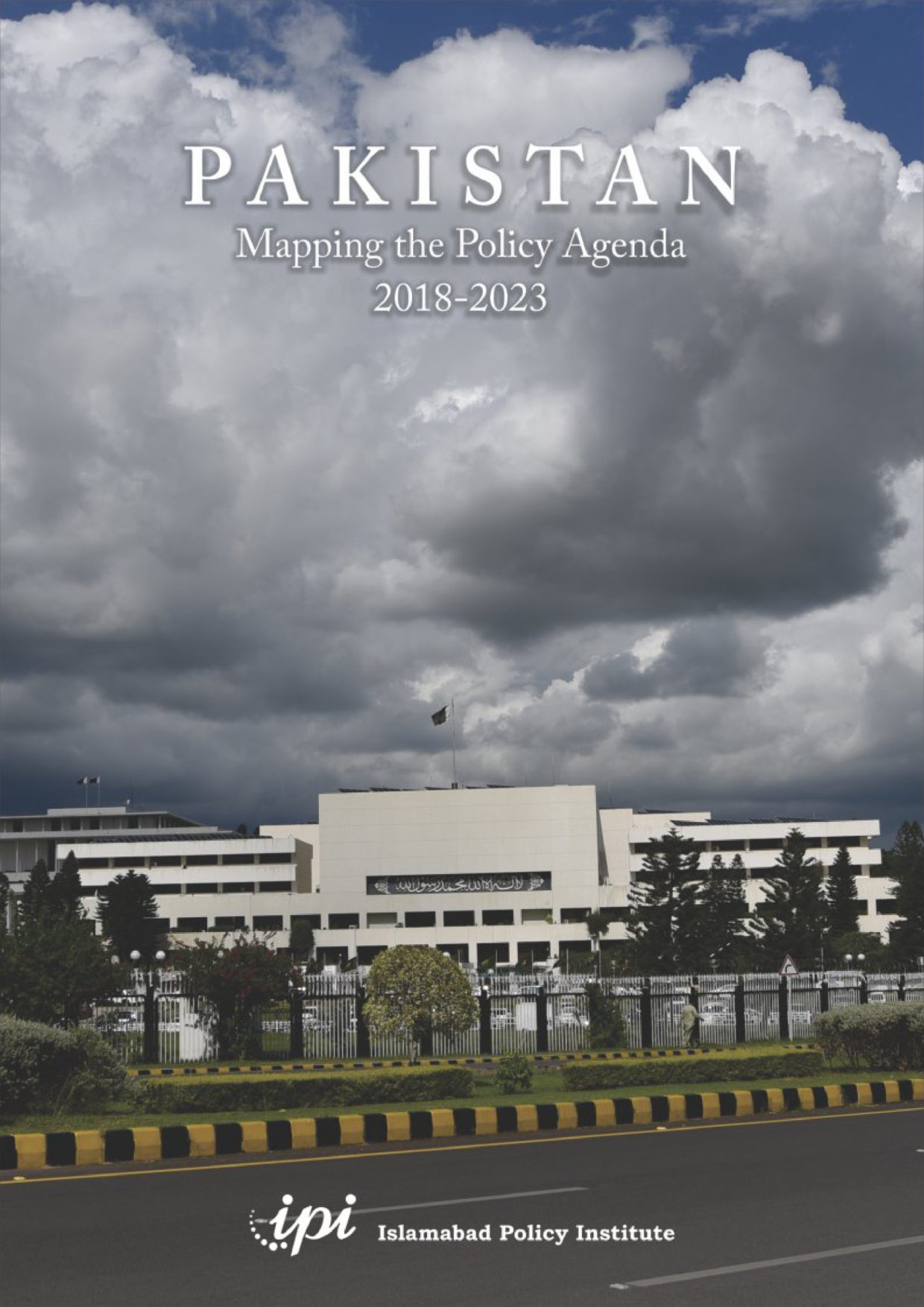
Policy Institute (IPI) in collaboration with Konrad
Adenauer Stiftung produced a report on critical challenges facing the country.
The report titled Pakistan: Mapping The Policy Agenda contained extensive
policy recommendations for the government covering the following areas:
Economy, CPEC, Energy, Water crisis, Extremism/Terrorism, Education, Health,
Access to Justice, Climate Change, Foreign Policy, Defense, Freedom of Expression/Media
and civil military relations.
Leading
experts in respective fields contributed to the report. These included Ex
Foreign Secretary Shamshad Ahmad Khan, former defense secretary Lt Gen Asif
Yasin Malik, Ex-DG ACCDA Khalid Banuri, Muzzafar Talpur (Oxfam), Barrister
Sarah Belal, Ex-VC UHS Prof Dr Mubashar Malik (Health), Musharraf Zaidi, Raza
Rumi, Prof Sajjad Bokhari, Amir Rana, Syed Muhammad Ali & Chairman HEC
Tariq Banuri. Muhammad Asim, CFA; Awais A. Sattar, CFA; & Seemab Shehzad, CFA
have authored the chapter on Economy.
The
publication, moreover, contained IPI’s institutional recommendations and
analysis of the manifestos of political parties with a view to explore common
ground for cooperation between government and the opposition on critical
challenges confronted by the country.
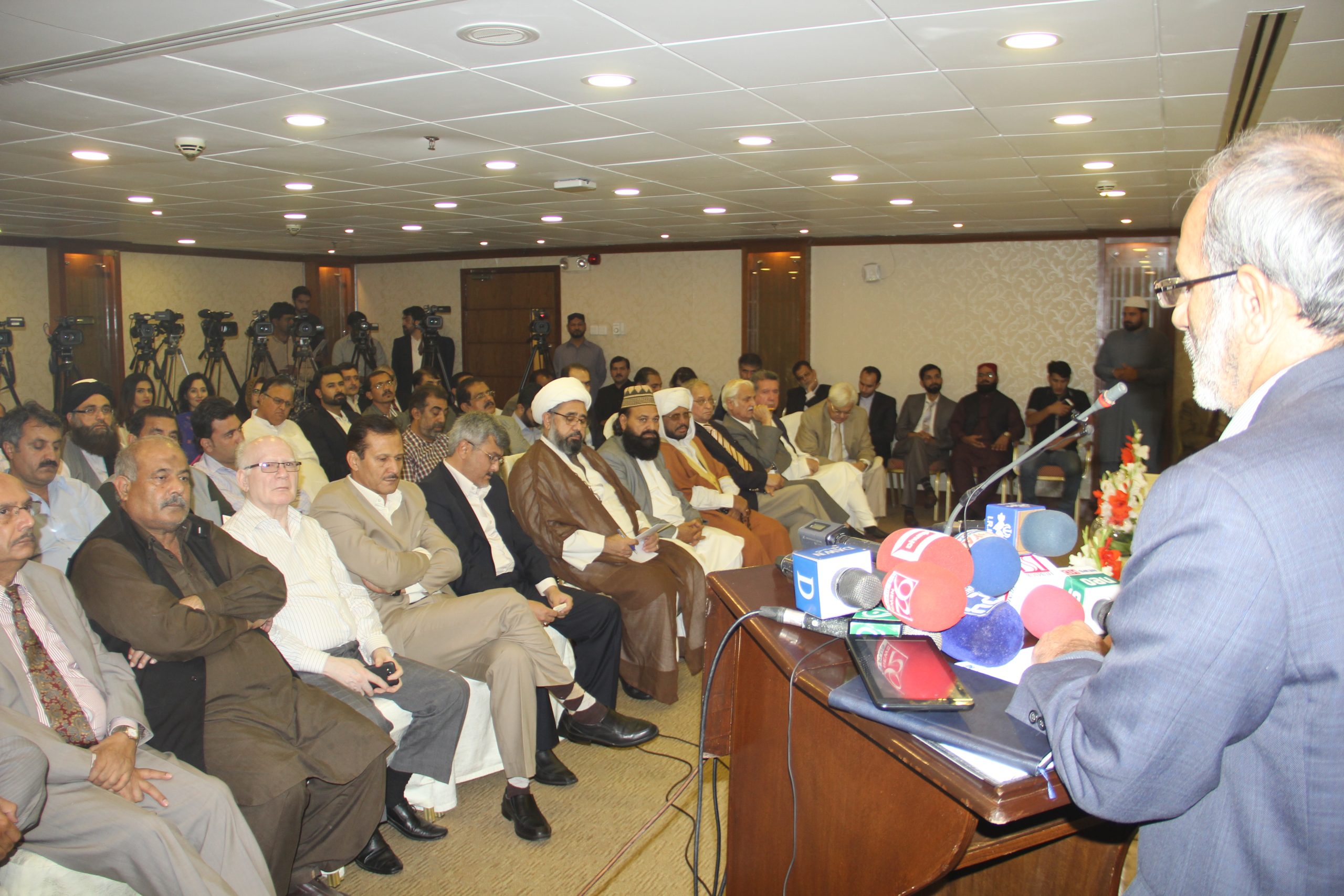
The report
was launched on September 10, 2018 in Islamabad.
Politicians
from across the political divide participated in the event that was widely
attended by academia, think tank community, media, political activists and
foreign diplomats based in Islamabad.
The speakers
during the event called upon the government to adopt a collaborative and
consensus building approach for addressing national issues. They underscored
the need for improving the implementation aspect of the policies.
Speaking at
the launch ceremony PML-N leader Senator Mussadiq Malik said he hopes that PTI
government will continue with the infrastructure projects, initiated by the
previous government, for the benefit of common man. Citing the example of the
efforts of the previous government on power generation, he said, the new
administration should now address the problems in transmission and
distribution. He further said that a holistic view of security should be taken
instead of looking at the things through the narrow securitized view.
PPP General
Secretary Senator Farhatullah Babar praised the publication as “remarkably
refreshing” and noted IPI’s recommendations regarding Nuclear Posture Review,
extremism and terrorism and mainstreaming of banned organizations. He, however, regretted that the issue was not
recommendations, but that of the will to implement them. He called for
introspection on who was formulating the policies and who was expected to
implement them.
Senator
Anwar-ul-Haq Kakar of Balochistan Awami Party regretted that Pakistan, despite
making immense sacrifices in the war on terror, was still being maligned. He
said there were elements within the country, who were propagating that
particular view and urged them to have a broader look at the affairs.
Senator
Sitara Ayaz of Awami National Party underscored the need for internal
stability. She called for strengthening of the Parliament and urged the
government to place a greater focus on addressing the problems facing the
country.
Allama Raja
Nasir Abbas of Majlis Wahdatul Muslimeen pointed out that national institutions
were weak and the government would have to undertake a massive reforms program
for revitalizing them. He appreciated Prime Minister Imran Khan’s assertion
that Pakistan will not fight others’ wars and said that it marks a strategic
shift.
Maulana Amin
Shaheedi of Ummat-e-Wahida asked the new government to show political courage
for tackling some of the deep rooted problems and have confidence in national
resources rather than looking outwards for assistance.
Pakistan
Tehrik-e-Insaaf’s Nadeem Afzal Chan said the country would have genuine
democracy once the political parties that are the building blocks of this
political fabric become democratic in their organizational structures.
Executive
Director IPI Prof Sajjad Bokhari said: “As the constitutional democracy takes
roots, new Parliament and government have their work cut out for them to assert
democratic supremacy. Democratic consolidation is still work in progress, and it
will be undoubtedly, marred by events”. He further said: “Democratic leaders
and civilian policy-makers, thus, have an added responsibility of actually
delivering on campaign promises and earning necessary political capital and
policy space to affect change. It is here, that, this report comes in handy for
Pakistan’s new leadership and policy-makers.”